










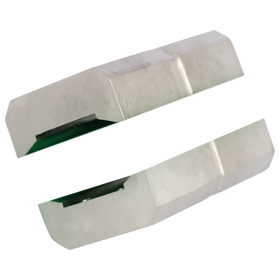
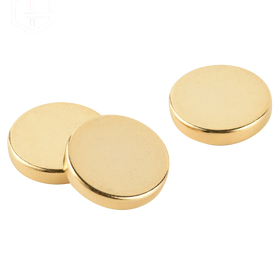



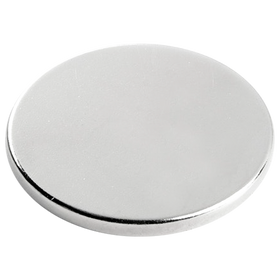


Alnico Disc Magnet with Channel – 9.7mm (D) x 5.88mm (H) | 3.99mm Channel | Diametrically-Magnetised
Same Day Dispatch
Order before 1pm to qualify for same day dispatch.
Alnico Disc Magnet with Channel – 9.7mm x 5.88mm | 3.99mm Channel | Diametrically Magnetised
Description
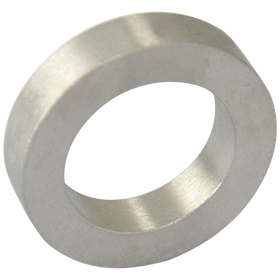
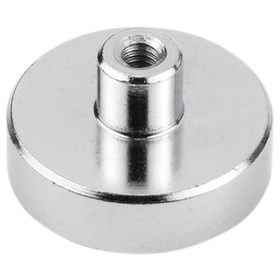
The Alnico Disc Magnet with Channel – 9.7mm Diameter x 5.88mm Height | 3.99mm Channel | Diametrically Magnetised is a compact, precision-shaped permanent magnet designed for specialised magnetic assemblies, engineering projects, scientific applications and magnetic field investigations.
Manufactured from Alnico (Aluminium, Nickel and Cobalt alloy), this small cylindrical magnet combines the temperature stability and corrosion resistance associated with Alnico materials with a distinctive channelled design and diametrical magnetisation.
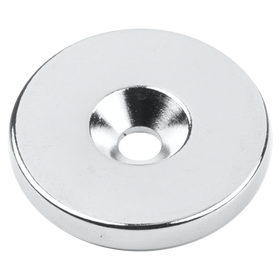
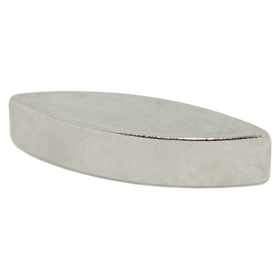
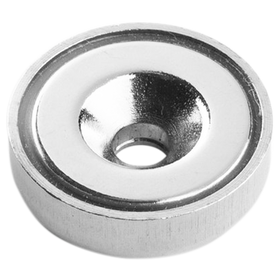
Measuring 9.7mm in diameter and 5.88mm in height, the magnet features a 3.99mm channel, providing a specialised profile for applications requiring a magnetic component with a recessed or channelled section.
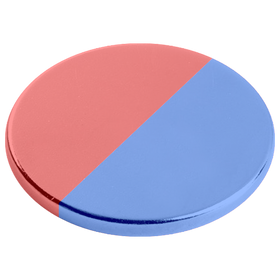
Unlike conventional axially magnetised disc magnets, which have their North and South poles on opposite flat faces, this magnet is diametrically magnetised. Its magnetic poles are positioned on opposite sides of the curved circumference, with the magnetisation direction running across the diameter.
This magnetic orientation is particularly useful for applications involving rotational magnetic field detection, magnetic sensing, position monitoring and experimental magnetic assemblies where the direction of the magnetic field is important.
The combination of its compact dimensions, channelled geometry and diametrical magnetic orientation makes this Alnico magnet a specialised option for engineers, researchers, manufacturers and educational institutions.
Alnico magnets are known for their excellent temperature stability and ability to retain useful magnetic properties in environments where some other permanent magnet materials may be less suitable. They also offer good corrosion resistance, although actual operating limits depend on the specific Alnico grade and application.
Whether you're developing a magnetic sensor assembly, conducting scientific experiments or replacing a specialised magnetic component, this 9.7mm diametrically magnetised Alnico disc magnet with 3.99mm channel provides a distinctive magnetic configuration for precision applications.
Also known as a diametrically magnetised Alnico disc, channelled Alnico magnet, Alnico sensor magnet, radial-pole disc magnet or specialised cylindrical permanent magnet, this product is suited to applications requiring a defined magnetic field orientation.
Key Features
-
9.7mm Diameter: Compact cylindrical design for precision magnetic assemblies.
-
5.88mm Height: Small profile suitable for specialised engineering applications.
-
3.99mm Channel: Channelled geometry for compatible mounting and assembly requirements.
-
Diametrically Magnetised: North and South poles positioned on opposite sides of the curved circumference.
-
Alnico Magnetic Material: Permanent magnetic alloy primarily containing aluminium, nickel, cobalt and iron.
-
Excellent Temperature Stability: Alnico magnets generally perform well at elevated temperatures compared with many other permanent magnet materials.
-
Good Corrosion Resistance: Alnico offers useful resistance to corrosion in suitable environments.
-
Permanent Magnetic Field: No external electrical power required.
-
Specialised Magnetic Orientation: Suitable for selected sensor, rotational and position-detection applications.
-
Compact Precision Component: Useful for scientific research, engineering and experimental magnetic systems.
Common Applications
Magnetic Sensors
Suitable for compatible magnetic sensor assemblies where a diametrically oriented magnetic field is required.
Rotary Position Detection
Can be incorporated into selected rotating magnetic assemblies where changes in magnetic field direction are detected by an appropriate sensor.
Scientific Research
Useful for investigating magnetic field behaviour, polarity and magnetisation orientation.
Engineering Prototypes
Suitable for experimental devices and specialised magnetic mechanisms requiring a compact, channelled magnet.
Magnetic Field Demonstrations
Demonstrate the difference between axial and diametrical magnetisation.
Instrumentation
May be suitable for specialised magnetic instruments where Alnico's magnetic properties and temperature stability are beneficial.
Replacement Magnetic Components
Potentially suitable for replacing existing channelled Alnico magnets where dimensions, magnetisation direction and magnetic performance match the original component.
Educational Experiments
Useful for advanced physics and engineering demonstrations involving permanent magnet geometry and field orientation.
What Does Diametrically Magnetised Mean?
Diametrical magnetisation means that the magnet's North and South poles are positioned on opposite sides of its curved circumference.
Rather than passing through the magnet's height, the primary magnetisation direction runs across its diameter.
Diametrically Magnetised Disc
-
North and South poles are located on opposite sides of the circumference.
-
Magnetisation runs across the diameter.
-
Produces a different magnetic field distribution from an axially magnetised disc.
-
Can be useful in rotating magnetic assemblies and compatible sensor applications.
Axially Magnetised Disc
-
North and South poles are located on opposite flat circular faces.
-
Magnetisation runs through the thickness or height.
-
Commonly used in general-purpose holding and attachment applications.
Why is this important?
Magnetisation direction determines how a magnet interacts with surrounding components, sensors and other magnets.
For applications requiring diametrical magnetisation, an axially magnetised disc of the same dimensions is not necessarily an interchangeable replacement.
What Is the Purpose of the 3.99mm Channel?
The magnet features a 3.99mm channel, providing a specialised geometry that may be useful for positioning or integrating the magnet into compatible mechanical assemblies.
Depending on the design of the equipment, a channelled magnet may assist with locating, aligning or accommodating adjacent components.
Potential applications include:
-
Custom magnetic assemblies
-
Specialised positioning systems
-
Engineering prototypes
-
Sensor mechanisms
-
Experimental magnetic devices
Important: The channel's exact profile, orientation and dimensional reference have not been supplied. Confirm these details before specifying the magnet for a precision-fit assembly.
Why Choose an Alnico Channelled Disc Magnet?
Specialised Diametrical Magnetisation
The magnetic field orientation makes this product suitable for applications requiring poles across the diameter rather than on the flat faces.
Compact Dimensions
The 9.7mm diameter and 5.88mm height allow integration into suitably sized assemblies.
Channelled Construction
The 3.99mm channel provides a distinctive physical profile for compatible mechanical designs.
Excellent Temperature Stability
Alnico magnets are commonly selected for applications where temperature stability is important.
Good Corrosion Resistance
Alnico generally offers good resistance to corrosion compared with unprotected neodymium magnets.
Permanent Magnetic Properties
Produces a magnetic field without an external electrical power supply.
Technical Specifications
| Specification | Details |
|---|---|
| Product Name | Alnico Disc Magnet with Channel |
| Magnet Type | Permanent Disc / Cylindrical Magnet |
| Magnetic Material | Alnico |
| Shape | Disc with Channel |
| Diameter (D) | 9.7mm |
| Height (H) | 5.88mm |
| Channel Dimension | 3.99mm |
| Magnetisation Direction | Diametrical |
| Magnetic Pole Orientation | North and South on Opposite Sides of the Circumference |
| Alnico Grade | Not Specified |
| Magnetic Pull Force | Not Specified |
| Surface Gauss | Not Specified |
| Channel Profile and Orientation | Not Specified |
| Coating / Finish | Not Specified |
| Maximum Operating Temperature | Not Specified |
| Primary Applications | Magnetic Sensors, Engineering, Scientific Research and Specialised Magnetic Assemblies |
Alnico vs Neodymium vs Ferrite Magnets
| Feature | Alnico | Neodymium | Ferrite |
|---|---|---|---|
| Magnetic Material | Aluminium, Nickel, Cobalt and Iron Alloy | Neodymium, Iron and Boron | Ceramic Iron Oxide Compound |
| Relative Magnetic Strength | Grade-dependent; generally below neodymium | Typically very high | Generally lower than neodymium |
| Temperature Stability | Excellent | Grade-dependent | Generally good |
| Corrosion Resistance | Generally good | Usually requires protective coating | Generally very good |
| Resistance to Demagnetisation | Relatively low in many grades | Generally high | Generally high |
| Typical Applications | Sensors, Instruments and High-Temperature Systems | Compact High-Strength Assemblies | General-Purpose and Industrial Applications |
Why choose Alnico?
Alnico is often selected for specialised applications where temperature stability, magnetic field characteristics and material properties are more important than achieving the highest possible magnetic strength.
Factors Affecting Magnetic Performance
Magnetisation Direction
The diametrical orientation determines the direction and distribution of the magnetic field.
Alnico Grade
Different Alnico grades have different magnetic properties, including remanence and resistance to demagnetisation.
External Magnetic Fields
Strong opposing magnetic fields may partially demagnetise Alnico magnets.
Operating Temperature
Although Alnico offers excellent temperature stability, its maximum operating temperature depends on the grade and application.
Magnetic Circuit
Nearby ferromagnetic materials and the arrangement of the assembly can influence magnetic field behaviour.
Air Gaps
The distance between the magnet and nearby components affects magnetic interaction.
Mechanical Positioning
Correct alignment is particularly important for magnetic sensing and rotational applications.
How to Use the Alnico Disc Magnet with Channel
-
Confirm Dimensions: Verify that the 9.7mm diameter, 5.88mm height and 3.99mm channel are compatible with the intended assembly.
-
Identify Magnetic Poles: Use an appropriate magnetic pole indicator or field measurement device to determine the North and South pole positions.
-
Check Magnetisation Requirements: Confirm that diametrical magnetisation is required.
-
Inspect the Channel: Ensure the channel geometry is compatible with the mating component.
-
Position Carefully: Install the magnet in the correct orientation for the application.
-
Avoid Excessive Force: Alnico is brittle and may fracture under impact or excessive mechanical pressure.
-
Test the Assembly: Verify magnetic field behaviour and system performance before final use.
Installation Tip: For sensor applications, confirm the magnetic field orientation relative to the sensor's sensitive axis before completing the assembly.
Care and Maintenance
-
Handle carefully to avoid chipping or cracking.
-
Avoid dropping the magnet onto hard surfaces.
-
Do not subject the magnet to excessive mechanical pressure.
-
Keep away from strong opposing magnetic fields.
-
Store in a clean, dry environment.
-
Avoid exposing the magnet to temperatures beyond its verified operating range.
-
Keep magnetic surfaces free from accumulated ferrous particles.
-
Use protective packaging during transport.
-
Avoid machining or modifying the magnet without appropriate specialist processes and safety controls.
-
Store with suitable magnetic keepers where recommended for the particular magnet configuration.
Compliance & Safety
Brittle Material: Alnico magnets are hard and brittle and may chip or fracture if dropped or struck.
Demagnetisation: Alnico magnets may be susceptible to partial demagnetisation when exposed to strong opposing magnetic fields or unsuitable magnetic circuits.
Temperature: The maximum operating temperature for this specific Alnico grade has not been confirmed.
Precision Applications: Verify dimensions, channel geometry, magnetisation direction and magnetic performance before installation.
Medical Devices: Keep magnets away from pacemakers and other implanted medical devices where magnetic interference may be a concern.
Electronic Equipment: Avoid placing magnets near magnetically sensitive devices or instruments.
Small Parts: This magnet is small and presents a serious swallowing hazard. Keep away from children.
Safety-Critical Applications: Do not use for lifting, supporting suspended loads or safety-critical functions without appropriate engineering verification.
Frequently Asked Questions
What is an Alnico disc magnet with a channel?
It is a permanent Alnico magnet with a cylindrical shape and a specialised channelled section, designed for compatible magnetic and mechanical assemblies.
What are the dimensions of this magnet?
The magnet measures 9.7mm in diameter and 5.88mm in height, with a 3.99mm channel.
What does diametrically magnetised mean?
Diametrical magnetisation means the North and South poles are positioned on opposite sides of the curved circumference rather than on the flat circular faces.
Is this magnet axially magnetised?
No. This magnet is specified as diametrically magnetised.
Where are the North and South poles?
The North and South poles are located on opposite sides of the magnet's circumference.
What is the 3.99mm channel used for?
The channel provides a specialised physical profile for compatible mounting or assembly applications. Its exact geometry should be verified before installation.
Can this magnet be used with a Hall effect sensor?
Potentially. Diametrically magnetised magnets are used in some Hall effect sensing systems, but compatibility depends on the sensor, magnetic field strength and assembly geometry.
Is this magnet suitable for rotary position sensing?
It may be suitable for selected rotary sensing applications where a diametrically oriented magnetic field is required.
Is Alnico stronger than neodymium?
Generally, neodymium magnets provide greater magnetic strength for a comparable size. Alnico is often selected for other characteristics, including temperature stability.
Can Alnico magnets withstand high temperatures?
Alnico magnets generally have excellent temperature stability, although the maximum operating temperature of this specific magnet has not been supplied.
Are Alnico magnets brittle?
Yes. Alnico is a hard, brittle magnetic material that can chip or fracture under impact.
Can this magnet lose its magnetism?
Yes. Strong opposing magnetic fields, unsuitable magnetic circuits or excessive temperatures may cause demagnetisation.
What is the magnetic pull force?
A specific magnetic pull-force rating has not been supplied.
What is the surface Gauss?
A surface Gauss rating has not been provided.
What Alnico grade is this magnet?
The Alnico grade has not been specified.
Does this magnet require electricity?
No. It is a permanent magnet and generates a magnetic field without external electrical power.
Related Products
-
Alnico Disc Magnets
-
Alnico Cylinder Magnets
-
Diametrically Magnetised Magnets
-
Alnico Block Magnets
-
Alnico Rod Magnets
-
Neodymium Diametrically Magnetised Magnets
-
Ferrite Diametrically Magnetised Magnets
-
Magnetic Sensor Magnets
-
Magnetic Field Measurement Equipment
-
Industrial Permanent Magnets
Please Note
The Alnico Disc Magnet with Channel – 9.7mm x 5.88mm | 3.99mm Channel | Diametrically Magnetised is intended for compatible scientific, engineering and specialised magnetic applications.
The Alnico grade, magnetic pull force, surface Gauss, exact channel geometry, coating and maximum operating temperature have not been specified.
Important: This magnet is diametrically magnetised. Confirm magnetic pole orientation, channel dimensions and magnetic performance before use in precision assemblies.
Returns Policy
If you are not entirely satisfied with your purchase, we're here to help.
We have a 30 Day Returns policy at Frenergy Magnets. You may return your item within 30 days of receiving it to receive a refund.
The product/s must be unused and in the same condition you received them in. Please contact us at info@frenergy.com.au to initiate the returns process.
The buyer is responsible for the cost of returning the order.


