


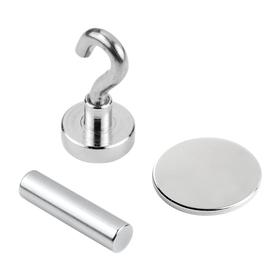
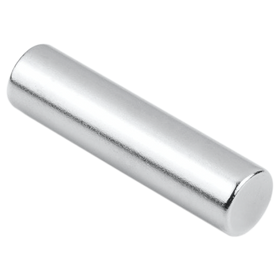



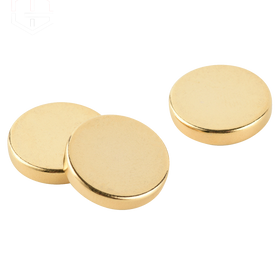
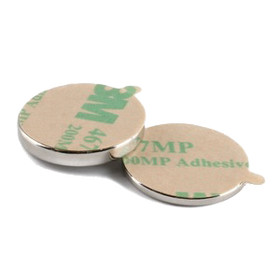
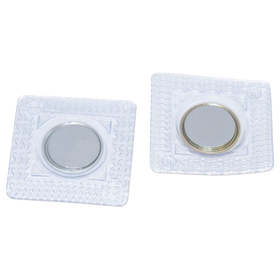




Neodymium Cylinder Magnet 12.7mm x 12.7mm N48
Same Day Dispatch
Order before 1pm to qualify for same day dispatch.
Neodymium Cylinder Magnet – 12.7mm x 12.7mm | N48
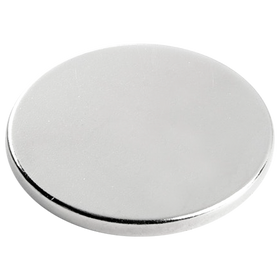
The Neodymium Cylinder Magnet – 12.7mm x 12.7mm | N48 is a compact, high-performance rare earth permanent magnet measuring 12.7mm in diameter x 12.7mm long. Manufactured from N48 grade Neodymium Iron Boron (NdFeB), this cylindrical magnet provides high magnetic energy density in a convenient, compact form suitable for engineering, manufacturing, product assembly, sensing, positioning, fixtures, machinery and custom magnetic applications.
With an equal 12.7mm diameter and 12.7mm length, equivalent to approximately 1/2 inch x 1/2 inch, this magnet has a balanced cylindrical profile. Its geometry makes it useful for integration into cylindrical recesses, housings and mechanical components where a compact but substantial permanent magnet is required.
The N48 magnetic grade provides high magnetic performance relative to the magnet's size. This makes the magnet suitable for a broad range of industrial, engineering, electronics, research, prototype and OEM applications where compact dimensions and permanent magnetic attraction are important.
Also known as an N48 neodymium cylinder magnet, 12.7mm rare earth magnet, 1/2-inch neodymium cylinder, NdFeB rod magnet or cylindrical rare earth magnet, this product operates permanently without electricity, batteries or charging.
Key Features
- Diameter: 12.7mm
- Length: 12.7mm
- Dimensions: 12.7mm diameter x 12.7mm long
- Approximate imperial size: 1/2 inch diameter x 1/2 inch long
- Shape: Cylinder
- Material: Neodymium Iron Boron (NdFeB)
- Magnetic grade: N48
- Magnet type: Rare earth permanent magnet
- Equal diameter and length
- Compact cylindrical geometry
- High magnetic performance relative to size
- Suitable for engineering and manufacturing
- Useful for product assemblies
- Suitable for sensors and instrumentation
- Useful for positioning and alignment
- Suitable for fixtures and jigs
- Ideal for prototypes and OEM magnetic systems
- Permanent magnetic operation
- No electricity, batteries or charging required
Common Applications
- Engineering
- Manufacturing
- Industrial equipment
- Machinery
- Product assemblies
- Magnetic positioning
- Component alignment
- Fixtures and jigs
- Electronics
- Sensors
- Instrumentation
- Hall-effect sensors
- Reed switches
- Proximity detection
- Position sensing
- Magnetic switching
- Equipment housings
- Research and development
- Laboratory equipment
- Prototype devices
- OEM products
- Custom magnetic assemblies
12.7mm x 12.7mm Cylinder Magnet
This N48 neodymium magnet measures 12.7mm in diameter x 12.7mm long, creating a cylinder with a 1:1 diameter-to-length ratio.
At approximately 1/2 inch x 1/2 inch, this size provides a useful balance between compact dimensions and magnetic material volume.
The cylindrical geometry can be particularly useful for integration into:
- Round recesses
- Bored housings
- Mechanical components
- Sensor assemblies
- Equipment
- Fixtures
- Prototype mechanisms
- Custom magnetic systems
The stated dimensions describe the physical size of the magnet and do not represent its pull force or holding capacity.
N48 Grade Neodymium
This cylinder magnet is manufactured from N48 grade Neodymium Iron Boron, a high-performance rare earth permanent magnetic material.
N48 offers high magnetic energy density, making it particularly useful where significant magnetic performance is required from relatively compact dimensions.
Potential advantages include:
- High magnetic performance relative to size
- Compact installation dimensions
- Permanent magnetic operation
- Suitability for space-constrained assemblies
- Versatility across engineering and product applications
What Does N48 Mean?
N48 identifies the magnetic grade of the Neodymium Iron Boron material.
The numerical designation relates to the material's maximum energy product and is used to classify the magnetic performance potential of NdFeB materials.
The N48 designation does not mean this magnet has a 48kg pull force.
N48 also does not directly specify:
- Pull force
- Surface Gauss
- Holding capacity
- Safe working load
- Magnetisation direction
- Pole configuration
- Maximum operating temperature
These characteristics depend on the finished magnet, magnetic circuit and application.
Engineering and Manufacturing Applications
The 12.7mm x 12.7mm cylindrical format is suitable for a variety of engineered assemblies.
Potential uses include:
- Magnetic retention
- Positioning systems
- Alignment mechanisms
- Machinery components
- Equipment housings
- Removable assemblies
- Production fixtures
- Jigs
- Product development
- Custom magnetic systems
Where magnetic holding performance is critical, testing should reproduce the actual target material, air gap, orientation and mechanical load of the finished application.
Sensors and Instrumentation
Cylinder magnets are frequently incorporated into magnetic sensing systems.
Potential applications include:
- Hall-effect sensors
- Reed switches
- Position detection
- Proximity sensing
- Magnetic switching
- Rotation detection
- Movement monitoring
- Industrial instrumentation
Sensor performance depends on the magnet's magnetisation direction, pole orientation, distance from the sensor, sensor sensitivity and installation geometry.
The magnetisation direction of this product has not been supplied and should be confirmed where magnetic field orientation is critical.
Positioning and Alignment
This N48 cylinder magnet may also be incorporated into appropriately designed magnetic positioning and alignment systems.
Potential functions include:
- Component locating
- Repeatable positioning
- Magnetic alignment
- Removable retention
- Assembly aids
- Fixtures
- Prototype mechanisms
Where multiple magnets are used together, confirm polarity before permanent installation.
Magnetisation Direction
Cylinder magnets can be manufactured with different magnetic orientations.
A 12.7mm diameter x 12.7mm long cylinder magnet could potentially be:
- Axially magnetised through its 12.7mm length
- Diametrically magnetised across its 12.7mm diameter
- Manufactured with another specialised configuration
The actual magnetisation direction and pole configuration have not been supplied and should not be assumed from the cylindrical shape.
Confirm this specification where pole position or magnetic field direction is important.
Magnetic Performance
Although the magnet is confirmed as N48 grade, practical performance depends on the complete magnetic system.
Important factors include:
- N48 material properties
- Magnet dimensions
- Magnetisation direction
- Pole configuration
- Magnetic circuit
- Target material
- Target steel thickness
- Contact area
- Surface condition
- Air gaps
- Load direction
- Mechanical leverage
- Installation geometry
No specific pull force or magnetic flux density in Gauss has been supplied.
These values should not be estimated from the N48 grade alone.
Direct Pull vs Shear
Magnetic holding performance changes depending on the direction in which the magnet is loaded.
Direct pull occurs when the magnet is separated perpendicular to the target surface.
Shear loading occurs when the magnet is encouraged to slide parallel to the target.
Shear performance can be influenced by:
- Surface friction
- Surface coatings
- Contact quality
- Air gaps
- Orientation
- Vibration
- Mechanical leverage
Testing under realistic conditions is recommended where magnetic holding performance is important.
Air Gaps Reduce Magnetic Attraction
Even small physical gaps can significantly reduce magnetic attraction.
Potential sources of separation include:
- Paint
- Powder coating
- Adhesive
- Plastic housings
- Protective films
- Product casings
- Dirt
- Rust
- Mechanical clearance
Where strong magnetic interaction is required, unnecessary air gaps should be minimised.
Target Steel Thickness
When a neodymium magnet is used against steel, the target becomes part of the magnetic circuit.
Magnetic performance can vary according to:
- Steel composition
- Steel thickness
- Target dimensions
- Available contact area
- Surface condition
Thin steel may not provide the same magnetic performance as a suitably thick ferromagnetic target.
Testing against the actual target material is recommended for performance-critical applications.
Bonding the Magnet
Adhesive bonding is one possible method for installing this N48 cylinder magnet.
Before bonding:
- Confirm the required polarity
- Confirm magnetic orientation
- Clean the magnet and bonding surface
- Remove dust, grease and contamination
- Select an adhesive compatible with the actual magnet finish
- Provide suitable dimensional clearance
- Avoid force-fitting
- Allow the adhesive to cure according to its instructions
The specific coating or plating has not been supplied, so adhesive compatibility with the magnet's actual surface finish should be confirmed.
Avoid Force-Fitting
Neodymium Iron Boron is hard but brittle.
Do not force this magnet into an undersized cylindrical recess.
Excessive mechanical pressure can cause:
- Chipping
- Cracking
- Fracturing
- Damage to the surface coating
Provide appropriate clearance and use a suitable retention method.
Do Not Machine Neodymium Magnets
Finished neodymium magnets should not be modified using conventional machining processes.
Avoid:
- Drilling
- Cutting
- Grinding
- Filing
- Crushing
- Machining
These processes can fracture the brittle magnetic material and damage any protective surface coating.
Select a magnet manufactured to the required dimensions instead.
Compatible Target Materials
Neodymium magnets attract suitable ferromagnetic materials, including:
- Mild steel
- Iron
- Magnetic steel
- Compatible ferromagnetic components
They do not effectively attract inherently non-magnetic materials such as:
- Aluminium
- Copper
- Brass
- Plastic
- Timber
- Glass
Many stainless steel grades may also be weakly magnetic or non-magnetic.
Test the intended target where magnetic compatibility is important.
N48 Neodymium vs Ferrite Magnets
N48 neodymium offers significantly higher magnetic energy density than conventional ferrite material.
N48 neodymium is particularly useful for:
- Compact assemblies
- High magnetic performance relative to size
- Sensors
- Electronics
- Precision mechanisms
- Space-constrained designs
- Custom engineered magnetic systems
Ferrite magnets may be preferred for:
- More economical applications
- Larger magnetic components
- Applications benefiting from good natural corrosion resistance
- Situations where lower magnetic performance relative to size is acceptable
For compact applications, N48 neodymium can provide substantial advantages where magnetic performance and available installation space are important.
Permanent Magnetic Operation
This N48 cylinder magnet is a permanent magnet.
It requires:
- No electricity
- No batteries
- No charging
- No external power supply
Its magnetic field remains continuously active during normal use.
Technical Specifications
- Product Name: Neodymium Cylinder Magnet – 12.7mm x 12.7mm | N48
- Product Type: Neodymium Cylinder Magnet
- Alternative Names: N48 Neodymium Cylinder Magnet, Rare Earth Cylinder Magnet, NdFeB Cylinder Magnet, 1/2-Inch Neodymium Magnet, Cylindrical Rare Earth Magnet
- Diameter: 12.7mm
- Length: 12.7mm
- Approximate Imperial Dimensions: 1/2 inch diameter x 1/2 inch long
- Shape: Cylinder
- Magnetic Material: Neodymium Iron Boron (NdFeB)
- Magnetic Grade: N48
- Magnet Type: Rare Earth Permanent Magnet
- Magnetic Operation: Permanent
- Power Required: None
- Compatible Targets: Suitable ferromagnetic iron and steel
- Primary Functions: Magnetic attraction, holding, positioning, alignment, sensing, switching and product integration
- Typical Applications: Engineering, manufacturing, electronics, sensors, machinery, fixtures, research, prototypes and OEM products
Safety and Handling
This N48 neodymium cylinder magnet should be handled carefully around other magnets and ferromagnetic objects.
Neodymium magnets can accelerate rapidly toward nearby magnets or steel surfaces, creating a risk of:
- Pinched fingers
- Magnet collisions
- Chipping
- Cracking
- Fragmentation
Neodymium is hard but brittle, so uncontrolled collisions should be avoided.
This magnet is also small enough to present a serious ingestion hazard.
Keep this magnet securely away from babies and children. If multiple magnets are swallowed, they can attract to each other through body tissue and cause severe internal injuries. Suspected magnet ingestion requires urgent medical attention.
Permanent magnets should also be kept an appropriate distance from:
- Pacemakers and implanted medical devices
- Magnetic cards
- Magnetic storage media
- Magnetically sensitive instruments
- Sensitive electronic equipment
Please Note
This product is an N48 Neodymium Cylinder Magnet measuring 12.7mm in diameter x 12.7mm long, approximately equivalent to 1/2 inch x 1/2 inch.
The N48 designation identifies the Neodymium Iron Boron magnetic material grade and does not mean the magnet has a 48kg pull force.
No specific pull force, Gauss rating, coating or plating, magnetisation direction, pole configuration, dimensional tolerance or maximum operating temperature has been supplied and these specifications should not be assumed.
Actual magnetic performance depends on the N48 material properties, magnetisation configuration, magnetic circuit, target material, target steel thickness, available contact area, surface condition, air gaps, load direction, mechanical leverage and installation geometry.
Neodymium is a hard and brittle magnetic material. Avoid impact, force-fitting, drilling, cutting, grinding or machining.
The stated 12.7mm diameter x 12.7mm length describes the physical dimensions of the magnet and does not represent its pull force, holding capacity or safe working load.
This magnet is not certified lifting equipment and should not be used for overhead or safety-critical lifting.
Typical Physical Properties

NB: Ranges are indicative for product category, please check individual products for specic values within that range.
Production Flow Diagram

Demagnetization Curves

Surface Treatment

The most common coating for Neodymium magnets is Nickel + Copper + Nickel (Ni + Cu + Ni). This coating offers the magnet relatively good protection from corrosion and passive applications. If the magnet will be exposed to moisture or liquid then consider the use of an organic coating such as Epoxy. A hard wearing coating, Epoxy is suited to applications where the magnet will come under some friction or knocking.
Range and Tolerance

Magnets are readily available in Blocks, Discs, Cylinders & Rings. We specializes in the supply of short-run prototype magnets including Arc Segments, various magnetic orientations etc. If you need a magnet size that we don't carry in stock, submit a Design-a-Magnet enquiry for a quote on your custom magnet design.
Magnetic Properties

Neodymium magnets are offered in several different grades. The first section N30-54 has an operating temperature of up to 80 degrees. Most of our stock only goes up to N38. The second section, denoted with the "M" prefix after the grade has an operating temperature 100 degrees. After this the grades are "H", "SH", "UH" & "EH". In order for the magnet to withstand a higher operating temperature, during production more of the raw material PrNd is incorporated as these elements have a naturally occurring resistance to high temperatures.
Returns Policy
If you are not entirely satisfied with your purchase, we're here to help.
We have a 30 Day Returns policy at Frenergy Magnets. You may return your item within 30 days of receiving it to receive a refund.
The product/s must be unused and in the same condition you received them in. Please contact us at info@frenergy.com.au to initiate the returns process.
The buyer is responsible for the cost of returning the order.


