






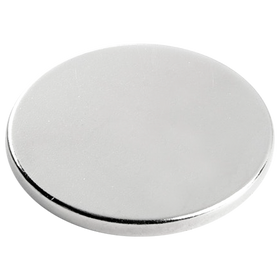

Neodymium Cylinder Magnet 12mm x 20mm N33AH | High Temperature ≤230ºC
Same Day Dispatch
Order before 1pm to qualify for same day dispatch.
Neodymium Cylinder Magnet – 12mm x 20mm | N33AH | High Temperature
Description
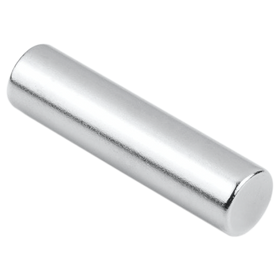
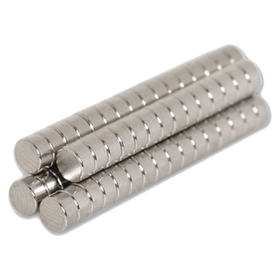
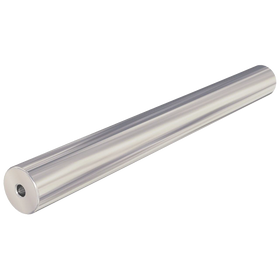
The Neodymium Cylinder Magnet – 12mm x 20mm | N33AH | High Temperature is a high-performance rare earth permanent magnet manufactured from N33AH grade Neodymium Iron Boron (NdFeB). Measuring 12mm in diameter x 20mm long, this cylindrical magnet combines strong magnetic performance with an advanced high-temperature material grade designed for applications requiring enhanced resistance to irreversible demagnetisation at elevated temperatures.
The N33AH magnetic grade is particularly useful in engineering, industrial and technical applications where conventional neodymium magnets may not provide sufficient temperature resistance. The AH classification indicates a high-coercivity neodymium material designed to maintain magnetic stability under more demanding thermal conditions.
With its elongated cylindrical shape and 20mm length, this magnet is suitable for integration into machinery, electronic assemblies, sensors, instrumentation, magnetic positioning systems and custom-manufactured equipment.
Its compact 12mm diameter makes it useful where installation space is limited, while the longer cylindrical profile provides flexibility for specialised mechanical and magnetic designs.
Also known as a high-temperature neodymium cylinder magnet, N33AH rare earth magnet, 12mm x 20mm NdFeB magnet, high-coercivity neodymium rod magnet or heat-resistant rare earth cylinder magnet, this product provides permanent magnetic operation without electricity, batteries or charging.
Key Features
-
Diameter: 12mm
-
Length: 20mm
-
Dimensions: 12mm diameter x 20mm long
-
Shape: Cylinder / Rod
-
Material: Neodymium Iron Boron (NdFeB)
-
Magnetic grade: N33AH
-
Temperature classification: High Temperature
-
Magnet type: Rare Earth Permanent Magnet
-
High-coercivity AH grade
-
Enhanced resistance to irreversible demagnetisation at elevated temperatures
-
Elongated cylindrical geometry
-
High magnetic performance relative to size
-
Suitable for industrial and engineering applications
-
Useful for sensors and instrumentation
-
Suitable for custom magnetic assemblies
-
Permanent magnetic operation
-
No electricity or batteries required
Common Applications
-
High-temperature magnetic assemblies
-
Industrial machinery
-
Engineering equipment
-
Manufacturing
-
Automotive components
-
Electronic assemblies
-
Sensors
-
Hall-effect sensing systems
-
Reed switches
-
Position detection
-
Proximity sensing
-
Magnetic switching
-
Instrumentation
-
Mechanical assemblies
-
Magnetic positioning systems
-
Fixtures and jigs
-
Product development
-
Research and development
-
Laboratory equipment
-
Prototypes
-
OEM manufacturing
-
Custom magnetic systems
Suitability depends on the required magnetic field, operating temperature, installation geometry and complete assembly design.
N33AH High-Temperature Neodymium Grade
One of the defining features of this magnet is its N33AH magnetic material grade.
N33AH belongs to the family of high-coercivity neodymium magnets developed for applications requiring improved resistance to irreversible magnetic losses at elevated temperatures.
The grade designation contains two important elements:
N33: Identifies the nominal magnetic energy grade of the NdFeB material.
AH: Indicates a high-coercivity, elevated-temperature neodymium classification.
The AH designation is associated with enhanced resistance to demagnetisation compared with conventional neodymium grades.
Why Is High Coercivity Important?
Coercivity describes a magnetic material's resistance to demagnetisation.
Higher intrinsic coercivity can be particularly valuable in applications involving:
-
Elevated operating temperatures
-
Opposing magnetic fields
-
Demanding magnetic circuits
-
Compact magnetic assemblies
-
Industrial operating environments
This makes N33AH a useful material choice where magnetic stability is an important engineering consideration.
High-Temperature Magnetic Performance
Neodymium magnets generally experience a reduction in magnetic output as temperature increases.
Some of this reduction is reversible, meaning magnetic performance can recover when the magnet cools.
However, exposure to excessive temperatures or adverse magnetic conditions can cause irreversible demagnetisation.
N33AH material is designed to provide enhanced resistance to this irreversible magnetic loss.
The actual operating temperature capability of a finished magnet depends on:
-
Magnetic material grade
-
Magnet geometry
-
Magnetic circuit
-
Magnetisation direction
-
External magnetic fields
-
Duration of heat exposure
-
Operating load line
-
Surrounding components
Important: A specific maximum operating temperature for this finished magnet has not been supplied and should be confirmed before use in temperature-critical applications.
12mm x 20mm Cylindrical Design
This magnet measures 12mm in diameter x 20mm long, giving it an elongated cylindrical profile.
The length is approximately 1.67 times the diameter.
This geometry may be useful where:
-
A cylindrical magnet is required
-
Installation space is limited
-
The magnet needs to fit inside a round housing
-
A longer magnetic component is preferred
-
Magnetic interaction is required within a compact mechanical assembly
-
A permanent magnet needs to be integrated into equipment
The stated dimensions describe the physical geometry of the magnet and do not indicate its pull force or holding capacity.
Engineering and Industrial Applications
N33AH neodymium cylinder magnets can be incorporated into engineered products where elevated-temperature performance and magnetic stability are important.
Potential applications include:
-
Industrial machinery
-
Manufacturing equipment
-
Mechanical assemblies
-
Magnetic positioning systems
-
Custom fixtures
-
Equipment housings
-
Automated systems
-
Magnetic couplings
-
Prototype mechanisms
For applications involving vibration, elevated temperatures or dynamic loading, the complete assembly should be tested under realistic operating conditions.
Electronics and Sensor Applications
Neodymium cylinder magnets are commonly used as magnetic field sources in sensing systems.
Potential applications include:
-
Hall-effect sensors
-
Reed switches
-
Position sensors
-
Proximity detection
-
Magnetic switching
-
Movement detection
-
Instrumentation
Sensor performance depends on:
-
Magnetisation direction
-
Pole orientation
-
Magnet-to-sensor distance
-
Sensor sensitivity
-
Magnetic field strength
-
Operating temperature
-
Surrounding ferromagnetic materials
The magnetisation direction of this product has not been supplied and should be confirmed where field orientation is important.
Magnetisation Direction
Cylinder magnets can be manufactured with different magnetic orientations.
A 12mm diameter x 20mm long cylinder magnet could potentially be:
-
Axially magnetised through its 20mm length
-
Diametrically magnetised across its 12mm diameter
-
Manufactured with another specialised magnetisation configuration
The actual magnetisation direction and pole configuration have not been supplied and should not be assumed from the cylinder shape.
Confirm the magnetisation direction before incorporating the magnet into a design requiring a specific magnetic field orientation.
Magnetic Performance
The practical magnetic performance of this N33AH cylinder magnet depends on:
-
Magnetic material properties
-
Magnet dimensions
-
Magnetisation direction
-
Pole configuration
-
Magnetic circuit design
-
Target material
-
Target steel thickness
-
Contact area
-
Surface condition
-
Air gaps
-
Operating temperature
-
Load direction
No specific pull force or surface Gauss rating has been supplied.
These values should not be inferred from the N33AH designation alone.
Direct Pull vs Shear Force
Magnetic holding performance varies depending on the direction of the applied load.
Direct pull occurs when the magnet is separated perpendicular to the attracting surface.
Shear loading occurs when the magnet is encouraged to slide parallel to the target surface.
Shear performance may be influenced by:
-
Surface friction
-
Surface coatings
-
Air gaps
-
Vibration
-
Installation orientation
-
Mechanical leverage
Where the magnet is used for holding or retention, performance should be tested under the actual operating conditions.
Air Gaps Reduce Magnetic Attraction
Magnetic attraction decreases as the distance between the magnet and target increases.
Potential sources of air gaps include:
-
Adhesive
-
Paint
-
Powder coating
-
Plastic housings
-
Protective films
-
Mechanical clearance
-
Surface irregularities
For applications requiring maximum magnetic interaction, unnecessary separation should be minimised.
Bonding and Installation
Adhesive bonding may be suitable for incorporating this magnet into a product or assembly.
Before installation:
-
Confirm magnetisation direction and polarity.
-
Check the intended magnetic arrangement.
-
Clean the bonding surfaces.
-
Remove dust, oil and grease.
-
Select an adhesive compatible with the magnet's actual coating.
-
Confirm the adhesive is suitable for the intended operating temperature.
-
Provide appropriate dimensional clearance.
-
Avoid force-fitting or excessive clamping pressure.
-
Allow the adhesive to cure according to the manufacturer's instructions.
The exact coating or plating of this magnet has not been supplied, so adhesive compatibility should be confirmed before permanent installation.
For elevated-temperature applications, the adhesive, housing and surrounding components must also be suitable for the intended temperature range.
Avoid Force-Fitting
Neodymium Iron Boron is a hard but brittle magnetic material.
Do not force the magnet into an undersized hole, recess or housing.
Excessive mechanical pressure can cause:
-
Chipping
-
Cracking
-
Fracturing
-
Damage to the protective coating
Provide appropriate dimensional clearance and use a suitable retention method.
Do Not Machine Neodymium Magnets
Finished neodymium magnets should not normally be mechanically modified.
Avoid:
-
Drilling
-
Cutting
-
Grinding
-
Filing
-
Crushing
-
Machining
These processes can damage the brittle NdFeB material and its protective surface.
If a different size or shape is required, use a magnet manufactured to the required dimensions.
Compatible Magnetic Materials
Neodymium magnets attract suitable ferromagnetic materials, including:
-
Iron
-
Mild steel
-
Magnetic steel
-
Compatible ferromagnetic components
They do not effectively attract inherently non-magnetic materials such as:
-
Aluminium
-
Copper
-
Brass
-
Plastic
-
Timber
-
Glass
Many stainless steel grades may also be weakly magnetic or non-magnetic.
Test the intended target material where magnetic compatibility is important.
N33AH Neodymium vs Standard Neodymium Grades
The key advantage of N33AH is its high-coercivity classification, which is intended to improve resistance to irreversible demagnetisation under elevated-temperature conditions.
Standard neodymium grades may provide higher magnetic energy products at room temperature, but they may not offer the same resistance to demagnetisation under demanding thermal conditions.
N33AH may be preferred where:
-
Elevated temperatures are expected
-
Magnetic stability is important
-
The assembly may experience demagnetising fields
-
Long-term magnetic performance is a design consideration
-
A high-coercivity rare earth material is required
The most suitable grade depends on the complete application rather than the numerical grade alone.
N33AH Neodymium vs Ferrite Magnets
Neodymium magnets generally provide higher magnetic energy density than conventional ferrite magnets.
N33AH neodymium may be preferred for:
-
Compact magnetic assemblies
-
High magnetic performance relative to size
-
Elevated-temperature NdFeB applications
-
Engineering components
-
Sensors and instrumentation
-
Custom magnetic systems
Ferrite magnets may be preferred for:
-
More economical applications
-
Larger magnetic components
-
Applications benefiting from natural corrosion resistance
-
Certain high-temperature applications where lower magnetic energy density is acceptable
The appropriate magnetic material depends on the required magnetic field, operating temperature, environmental conditions and mechanical design.
Permanent Magnetic Operation
This N33AH cylinder magnet is a permanent magnet.
It requires:
-
No electricity
-
No batteries
-
No charging
-
No external power supply
Its magnetic field remains continuously active during normal use.
Technical Specifications
| Specification | Details |
|---|---|
| Product Name | Neodymium Cylinder Magnet – 12mm x 20mm | N33AH | High Temperature |
| Product Type | High-Temperature Neodymium Cylinder Magnet |
| Magnetic Material | Neodymium Iron Boron (NdFeB) |
| Magnetic Grade | N33AH |
| Shape | Cylinder / Rod |
| Diameter | 12mm |
| Length | 20mm |
| Dimensions | 12mm diameter x 20mm long |
| Temperature Classification | High Temperature |
| Magnetic Operation | Permanent |
| Power Required | None |
| Compatible Targets | Suitable ferromagnetic iron and steel |
| Typical Applications | Industrial machinery, engineering, sensors, instrumentation, magnetic assemblies and OEM manufacturing |
Compliance & Safety
Neodymium magnets can attract rapidly and forcefully to other magnets and ferromagnetic objects.
Brittle Material: Neodymium Iron Boron is hard but brittle. Magnets can chip, crack or fracture if dropped, struck or allowed to collide.
Pinch Hazards: Keep fingers and skin clear when allowing magnets to approach steel surfaces or other magnets.
Do Not Machine: Avoid drilling, cutting, grinding or modifying the magnet.
Medical Devices: Keep magnets at an appropriate distance from pacemakers, implanted medical devices and magnetically sensitive equipment.
Children: Keep magnets securely away from babies and children. Swallowed magnets can cause severe internal injuries and require urgent medical attention.
High-Temperature Use: Confirm the maximum operating temperature of the finished magnet and ensure that adhesives, housings and surrounding components are suitable for the intended environment.
Lifting Applications: This magnet is not certified lifting equipment and must not be used for overhead or safety-critical lifting.
Frequently Asked Questions
What size is this magnet?
The magnet measures 12mm in diameter x 20mm long.
What does N33AH mean?
N33AH is a high-coercivity neodymium magnetic material grade designed for improved resistance to irreversible demagnetisation at elevated temperatures.
Is N33AH a high-temperature magnet?
Yes. N33AH is classified as a high-temperature neodymium grade. However, the specific maximum operating temperature of the finished magnet should be confirmed before use.
Is this magnet stronger than N52?
Not necessarily. N52 generally has a higher maximum energy product at room temperature, while N33AH is designed to offer improved resistance to demagnetisation under elevated-temperature conditions.
The most suitable grade depends on the application.
Is this magnet axially magnetised?
The magnetisation direction has not been supplied. It should be confirmed before use in applications requiring a specific pole orientation.
Can this magnet be used in industrial machinery?
It may be suitable for industrial machinery and equipment where its dimensions, magnetic properties and temperature capability meet the application requirements.
Can I glue this magnet into a housing?
Yes, provided a suitable adhesive is selected and the bond is designed for the actual coating, operating temperature and mechanical loads.
Can this magnet be drilled or cut?
No. Neodymium is brittle and should not be drilled, cut, ground or machined.
Does N33AH mean 33kg pull force?
No. N33AH identifies the magnetic material grade and high-coercivity classification. It does not indicate pull force or lifting capacity.
Related Products
Customers considering this product may also be interested in:
-
High-Temperature Neodymium Magnets
-
Neodymium Cylinder Magnets
-
Neodymium Disc Magnets
-
Neodymium Block Magnets
-
N35UH High-Temperature Magnets
-
Samarium Cobalt Magnets
-
Custom-Made Magnets
Please Note
The Neodymium Cylinder Magnet – 12mm x 20mm | N33AH | High Temperature measures 12mm in diameter x 20mm long and is manufactured from N33AH grade Neodymium Iron Boron.
The N33AH designation identifies a high-coercivity, elevated-temperature neodymium grade designed to provide enhanced resistance to irreversible demagnetisation.
A specific maximum operating temperature for the finished magnet has not been supplied and should not be assumed from the grade designation alone.
No specific pull force, Gauss rating, coating or plating, magnetisation direction, pole configuration or dimensional tolerance has been supplied.
Actual magnetic performance depends on the magnetic material, magnetisation configuration, magnetic circuit, operating temperature, target material, target steel thickness, contact area, air gaps and installation geometry.
Neodymium is a hard and brittle magnetic material. Avoid impact, force-fitting, drilling, cutting, grinding or machining.
This magnet is not certified lifting equipment and should not be used for overhead or safety-critical lifting.
Typical Physical Properties

NB: Ranges are indicative for product category, please check individual products for specic values within that range.
Production Flow Diagram

Demagnetization Curves

Surface Treatment

The most common coating for Neodymium magnets is Nickel + Copper + Nickel (Ni + Cu + Ni). This coating offers the magnet relatively good protection from corrosion and passive applications. If the magnet will be exposed to moisture or liquid then consider the use of an organic coating such as Epoxy. A hard wearing coating, Epoxy is suited to applications where the magnet will come under some friction or knocking.
Range and Tolerance

Magnets are readily available in Blocks, Discs, Cylinders & Rings. We specializes in the supply of short-run prototype magnets including Arc Segments, various magnetic orientations etc. If you need a magnet size that we don't carry in stock, submit a Design-a-Magnet enquiry for a quote on your custom magnet design.
Magnetic Properties

Neodymium magnets are offered in several different grades. The first section N30-54 has an operating temperature of up to 80 degrees. Most of our stock only goes up to N38. The second section, denoted with the "M" prefix after the grade has an operating temperature 100 degrees. After this the grades are "H", "SH", "UH" & "EH". In order for the magnet to withstand a higher operating temperature, during production more of the raw material PrNd is incorporated as these elements have a naturally occurring resistance to high temperatures.
Returns Policy
If you are not entirely satisfied with your purchase, we're here to help.
We have a 30 Day Returns policy at Frenergy Magnets. You may return your item within 30 days of receiving it to receive a refund.
The product/s must be unused and in the same condition you received them in. Please contact us at info@frenergy.com.au to initiate the returns process.
The buyer is responsible for the cost of returning the order.


