









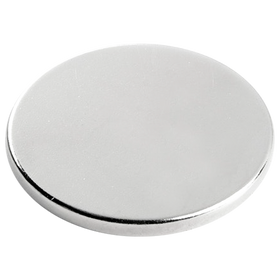


Neodymium Ring Magnet OD30mm x H4mm | Hole 10mm N42
Same Day Dispatch
Order before 1pm to qualify for same day dispatch.
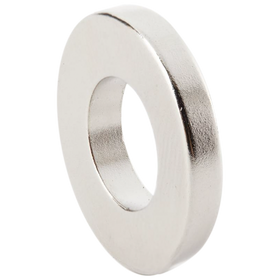
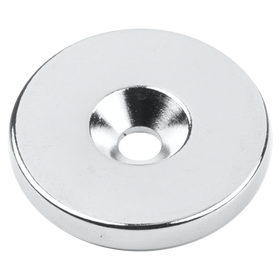
Neodymium Ring Magnet – 30mm OD x 10mm ID x 4mm H | N42 Rare Earth Magnet
Description
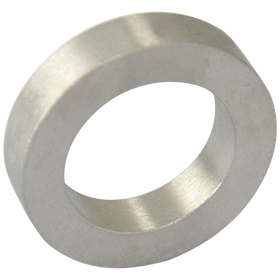
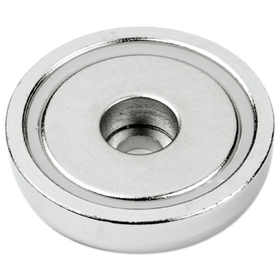
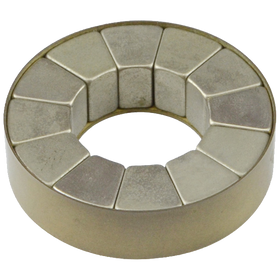
The Frenergy Magnets Neodymium Ring Magnet – 30mm Outer Diameter x 10mm Inner Diameter x 4mm Height | N42 is a high-strength Rare Earth permanent magnet featuring a circular ring design with a central mounting hole. Manufactured from N42-grade Neodymium Iron Boron (NdFeB), this versatile magnet combines powerful magnetic properties with a practical, low-profile construction.
Measuring 30mm in outer diameter, 10mm in inner diameter and 4mm in thickness, this Neodymium ring magnet is suitable for engineering, manufacturing, magnetic assemblies, sensors, custom mounting systems and a wide range of technical applications.
The 10mm central hole provides clearance for suitable shafts, mounting components, spacers and other assembly hardware, allowing the magnet to be incorporated into specialised equipment and custom designs.
Its 4mm thickness creates a slim magnetic profile, making it particularly useful where installation depth is limited but a larger circular magnetic surface is required.
Manufactured from N42-grade Neodymium, this magnet offers high magnetic energy density compared with conventional Ferrite magnets. N42 is a popular Rare Earth magnetic grade used in industrial, commercial and precision engineering applications.
The ring-shaped design allows components to pass through the centre of the magnet, making it useful for applications where a solid disc magnet would obstruct a shaft, fixing or other mechanical component.
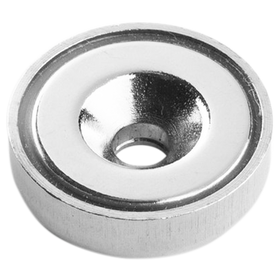
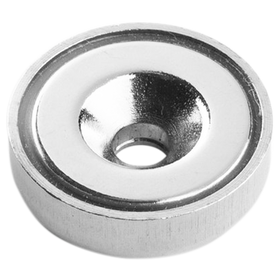
Unlike countersunk ring magnets, this product features a straight 10mm central hole, with no countersink specified. The opening can accommodate compatible mounting hardware, although the magnet itself should not be subjected to excessive fastening pressure.
Neodymium magnets are brittle by nature and can crack or chip when exposed to impact, excessive mechanical stress or uncontrolled collisions with other magnets and ferromagnetic materials.
The magnet may be installed within a suitable housing, retained using an engineered mounting arrangement or bonded to a compatible surface using an appropriate adhesive.
The actual magnetic holding force depends on the magnetisation direction, receiving steel thickness, contact area, air gaps, surface coatings and installation conditions.
Although the N42 grade identifies the magnetic material's energy classification, it does not establish the finished magnet's pull-force rating.
The specific pull force, surface Gauss, magnetisation direction, protective coating and maximum operating temperature have not been supplied.
These characteristics should be verified before using the magnet in applications requiring a particular magnetic field orientation, environmental resistance or guaranteed holding performance.
Also known as a 30mm Neodymium ring magnet, 30x10x4mm Rare Earth magnet, N42 circular magnet with hole, 30mm OD ring magnet, annular Neodymium magnet or flat magnetic ring, this product offers a versatile solution for custom magnetic assemblies.
Whether you're designing a magnetic coupling, developing an industrial fixture, manufacturing a specialised component or creating a custom magnetic mounting system, the Frenergy Magnets Neodymium Ring Magnet – 30mm OD x 10mm ID x 4mm H | N42 provides high-energy permanent magnetic material in a practical annular design.
Key Features
-
N42 Neodymium Grade: High-strength Rare Earth magnetic material.
-
30mm Outer Diameter: Practical circular magnetic profile.
-
10mm Inner Diameter: Central through-hole for compatible mounting components.
-
4mm Height: Slim, low-profile ring construction.
-
Neodymium Iron Boron (NdFeB): High-energy permanent magnetic material.
-
Ring-Shaped Design: Allows suitable shafts or components to pass through the centre.
-
High Magnetic Energy Density: Strong magnetic properties relative to size.
-
Permanent Magnetism: No batteries or electrical power required.
-
Straight Central Hole: Suitable for custom mounting arrangements.
-
Compact Installation Profile: Useful where available depth is limited.
-
Engineering Applications: Suitable for precision components and magnetic assemblies.
-
Custom Mounting Potential: Can be incorporated into suitable housings or bonded assemblies.
-
Versatile Magnetic Component: Relevant to manufacturing, research and product development.
Common Applications
Magnetic Mounting Assemblies
Incorporate the ring magnet into suitable mounting systems where a central opening is required for compatible hardware.
Magnetic Couplings
Use in appropriately engineered magnetic coupling arrangements where the magnet's geometry and field orientation meet the design requirements.
Precision Engineering
Integrate into specialised mechanical assemblies requiring a circular permanent magnet with a central hole.
Sensors and Electronics
Use in compatible magnetic sensing systems after verifying the magnetisation direction and magnetic field characteristics.
Industrial Equipment
Incorporate into custom machinery and manufacturing components requiring a compact ring-shaped magnet.
Product Manufacturing
Integrate into specialised products where the central opening accommodates a shaft, spacer or mechanical component.
Magnetic Fixtures
Develop suitable magnetic positioning, alignment and retention systems.
Research and Development
Use in controlled magnetic experiments, engineering prototypes and custom magnetic circuit designs.
Model Engineering
Incorporate into detailed mechanical models and specialised miniature assemblies.
Custom Magnetic Assemblies
Combine with suitable ferromagnetic components, housings and fixtures to create application-specific magnetic systems.
Why Choose a 30mm x 10mm x 4mm N42 Ring Magnet?
Practical Central Hole
The 10mm inner diameter provides clearance for compatible mounting components.
Low-Profile Construction
The 4mm thickness is useful for shallow assemblies and compact magnetic systems.
High Magnetic Energy Density
N42 Neodymium offers strong magnetic material properties compared with conventional Ferrite magnets.
Versatile Annular Shape
The ring design provides an alternative to solid disc magnets when a central opening is required.
Permanent Magnetic Performance
No electrical power is required to maintain the magnetic field.
Engineering Flexibility
Suitable for a wide variety of industrial, technical and custom magnetic applications.
Technical Specifications
| Specification | Details |
|---|---|
| Brand | Frenergy Magnets |
| Product Name | Neodymium Ring Magnet |
| Magnetic Material | Neodymium Iron Boron (NdFeB) |
| Magnet Category | Rare Earth |
| Magnetic Grade | N42 |
| Shape | Ring / Annular |
| Outer Diameter (OD) | 30mm |
| Inner Diameter (ID) | 10mm |
| Hole Diameter | 10mm |
| Height / Thickness | 4mm |
| Hole Type | Straight Through-Hole |
| Nominal Radial Ring Width | 10mm |
| Nominal Annular Face Area | Approximately 628.32mm² |
| Nominal Material Volume | Approximately 2,513.27mm³ |
| Estimated Magnet Weight | Approximately 18.85g |
| Magnetisation Direction | Not Specified |
| Pull Force | Not Specified |
| Surface Gauss | Not Specified |
| Protective Coating | Not Specified |
| Maximum Operating Temperature | Not Specified |
| Manufacturing Tolerance | Not Specified |
| Primary Applications | Magnetic Assemblies, Engineering, Fixtures and Custom Mounting |
Estimated weight is calculated using a representative NdFeB density of 7.5g/cm³ and is not a measured product specification.
Understanding the Magnet Dimensions
Outer Diameter – 30mm
The magnet has an overall outside diameter of 30mm, measured across the widest point of the circular body.
Inner Diameter – 10mm
The central opening measures 10mm in diameter, allowing compatible shafts, spacers or mounting components to pass through the magnet.
Height – 4mm
The ring magnet measures 4mm thick, making it suitable for relatively shallow mounting arrangements.
Radial Ring Width
The radial width of the magnetic material between the inner and outer edges is:
(30mm − 10mm) ÷ 2 = 10mm
Annular Face Area
The nominal area of one flat ring face is calculated by subtracting the central hole area from the outer circular area:
π × (15mm² − 5mm²) = approximately 628.32mm²
Material Volume
The nominal magnetic material volume is:
628.32mm² × 4mm = approximately 2,513.27mm³
Equivalent to approximately 2.513cm³.
Estimated Weight
Using a representative Neodymium magnet density of 7.5g/cm³:
2.513cm³ × 7.5g/cm³ = approximately 18.85 grams
Actual weight may vary due to manufacturing tolerances, material composition and coating.
What Is an N42 Neodymium Magnet?
An N42 Neodymium magnet is a permanent Rare Earth magnet manufactured from Neodymium Iron Boron material with an N42 magnetic grade classification.
N42 generally corresponds to a maximum energy product of approximately 40–43 MGOe, depending on the applicable material specification.
This indicates the magnetic material's energy capability rather than a guaranteed pull force.
N42 magnets are widely used in industrial, commercial and technical applications where high magnetic energy density is required.
What Is a Neodymium Ring Magnet?
A Neodymium ring magnet is a circular permanent magnet with a central hole extending through its thickness.
Ring magnets are also known as annular magnets or magnetic rings.
The central opening makes them suitable for applications involving shafts, mounting components, spacers and custom magnetic assemblies.
They are commonly used in engineering, manufacturing, magnetic sensing systems, fixtures and research applications.
Their performance depends on magnetic grade, magnetisation direction, geometry and the surrounding magnetic circuit.
How Does a Neodymium Ring Magnet Work?
Neodymium Iron Boron material produces a permanent magnetic field.
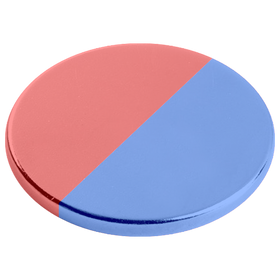
Depending on the magnetisation direction, the magnetic poles may be positioned on opposing flat ring faces, across the diameter or in another specified configuration.
For an axially magnetised ring magnet, the north and south poles are located on opposite flat annular faces.
For a diametrically magnetised ring magnet, the poles are positioned across the diameter.
The magnetisation direction of this particular product has not been specified and should be confirmed before use in applications requiring a defined magnetic field orientation.
Understanding Magnetisation Direction
Axial Magnetisation
The magnet is magnetised through its 4mm height, with poles on opposing flat ring faces.
Diametric Magnetisation
The magnet is magnetised across its diameter, with poles positioned on opposite sides of the ring.
Why Magnetisation Matters
Magnetisation direction determines the magnetic field distribution and influences suitability for magnetic couplings, sensors, fixtures and custom assemblies.
Do not assume a particular pole arrangement without confirmation.
Benefits of N42 Neodymium Ring Magnets
High Magnetic Energy Density
N42 Neodymium provides strong magnetic material properties in a compact component.
Central Mounting Opening
The 10mm hole accommodates compatible mechanical components.
Slim Construction
The 4mm height is useful where installation depth is limited.
Permanent Magnetic Field
No electrical power is required.
Versatile Engineering Geometry
The annular design suits a wide range of technical applications.
Custom Assembly Compatibility
Suitable for incorporation into appropriately engineered magnetic systems.
N42 vs Other Neodymium Grades
| Grade | Approximate Maximum Energy Product |
|---|---|
| N35 | 33–36 MGOe |
| N38 | 36–39 MGOe |
| N42 | 40–43 MGOe |
| N45 | 43–46 MGOe |
| N48 | 46–49 MGOe |
| N50 | 48–51 MGOe |
| N52 | 50–53 MGOe |
Higher magnetic grades generally offer greater maximum magnetic energy density, but actual holding strength also depends on the magnet's dimensions, magnetisation direction and application conditions.
Ring Magnets vs Disc Magnets
| Feature | Ring Magnet | Disc Magnet |
|---|---|---|
| Shape | Circular with Central Hole | Solid Circular |
| Central Opening | Yes | No |
| Mounting Options | Can Accommodate Compatible Components Through Centre | Requires Alternative Mounting |
| Magnetic Material Volume | Reduced by Central Opening | Full Circular Volume |
| Typical Applications | Shafts, Fixtures, Custom Assemblies | Closures, Displays, General Holding |
| Magnetic Performance | Depends on Grade and Geometry | Depends on Grade and Geometry |
A ring magnet is often preferred where a central opening is essential to the mechanical design.
How to Install or Use the N42 Ring Magnet
-
Confirm the Dimensions: Check the 30mm outer diameter, 10mm hole diameter and 4mm height.
-
Verify Magnetisation: Confirm the magnetic pole orientation required for the application.
-
Inspect the Magnet: Check for cracks, chips or coating damage.
-
Prepare the Assembly: Ensure the receiving components are clean and correctly aligned.
-
Check Hole Clearance: Confirm the shaft or mounting component fits without excessive force.
-
Select a Suitable Mounting Method: Use an appropriate housing, adhesive or engineered retaining arrangement.
-
Avoid Excessive Pressure: Do not overtighten fixings or apply concentrated mechanical loads to the magnet.
-
Position Carefully: Prevent uncontrolled contact with steel or other magnets.
-
Check Alignment: Confirm the magnet is positioned correctly within the assembly.
-
Test Performance: Verify magnetic holding strength and mechanical stability.
-
Inspect Regularly: Check for movement, corrosion or physical damage.
-
Handle Safely: Keep powerful magnets away from children and pets.
Factors Affecting Magnetic Holding Strength
Magnetic Grade
N42 identifies the magnetic material's energy classification.
Magnetisation Direction
The pole orientation influences the magnetic field and holding characteristics.
Receiving Steel
Steel thickness, composition and geometry affect magnetic attraction.
Air Gaps
Even small gaps between the magnet and receiving material can reduce holding strength.
Contact Area
The available magnetic contact area influences performance.
Central Hole
The 10mm opening reduces the magnetic material volume compared with a solid disc of the same outside dimensions.
Surface Coatings
Paint, plating and other layers may introduce additional separation.
Load Direction
Direct pull and sideways sliding loads produce different holding characteristics.
Temperature
Excessive heat can permanently reduce magnetic performance.
Mechanical Damage
Chips, cracks or coating damage may affect reliability.
Care and Maintenance
-
Handle carefully to prevent chipping or cracking.
-
Avoid uncontrolled collisions with steel or other magnets.
-
Do not drill or machine the magnet.
-
Do not overtighten mounting hardware.
-
Avoid applying concentrated pressure around the central hole.
-
Protect from excessive heat.
-
Keep dry where corrosion resistance has not been verified.
-
Store away from magnetically sensitive equipment.
-
Inspect for cracks or coating damage before installation.
-
Use suitable housings and mounting methods.
-
Verify performance before demanding applications.
-
Keep away from children and pets.
Compliance & Safety
Strong Magnetic Attraction: Neodymium magnets can attract ferromagnetic objects unexpectedly.
Brittle Material: Neodymium magnets may chip, crack or shatter under impact.
Pinch Hazard: Keep fingers clear when magnets approach steel or other magnets.
Swallowing Hazard: Powerful magnets can cause serious internal injuries if swallowed. Keep away from children and pets.
Medical Devices: Keep magnets away from pacemakers and magnetically sensitive implanted medical devices.
Electronic Equipment: Magnetic fields may interfere with sensitive electronics, sensors and equipment.
Mechanical Stress: Do not use the central hole as a means of applying excessive fastening pressure directly to the magnet.
Temperature Limitations: The maximum operating temperature has not been specified.
Corrosion Protection: The protective coating has not been confirmed.
Safety-Critical Applications: Independent engineering assessment and testing are required before use where failure could cause injury or damage.
Frequently Asked Questions
What are the dimensions of this Neodymium ring magnet?
It measures 30mm outer diameter, 10mm inner diameter and 4mm height.
What is the magnetic grade?
The magnet is N42 grade.
What material is it made from?
It is manufactured from Neodymium Iron Boron (NdFeB).
Is this a Rare Earth magnet?
Yes. Neodymium is a Rare Earth magnetic material.
What is the outer diameter?
The outer diameter is 30mm.
What is the hole diameter?
The central hole measures 10mm.
What is the thickness?
The magnet is 4mm thick.
What is the estimated weight?
Approximately 18.85g, calculated using representative NdFeB density.
Is the magnet axially magnetised?
The magnetisation direction has not been specified.
Is it diametrically magnetised?
The magnetisation direction has not been specified.
What is the pull force?
A pull-force rating has not been provided.
What is the surface Gauss?
The surface Gauss rating has not been supplied.
What coating does it have?
The protective coating has not been specified.
Is N42 a strong magnetic grade?
Yes. N42 is a high-energy Neodymium grade suitable for compact permanent magnet applications.
Is N42 stronger than N35?
N42 generally has a higher maximum energy product than N35, although actual holding performance depends on magnet design.
Is N52 stronger than N42?
N52 generally has a higher maximum energy product, but the finished magnet's performance depends on geometry and application conditions.
Can I use the hole for mounting?
Yes, the central opening can accommodate compatible mounting components, provided the assembly does not apply damaging pressure to the magnet.
Is the hole countersunk?
No countersink has been specified. The product is described as having a straight 10mm central hole.
Can I use it for magnetic couplings?
Potentially, in appropriately engineered coupling systems with a suitable magnetic field orientation.
Can I use it for magnetic sensors?
Yes, in compatible applications after confirming the magnetisation direction and magnetic field characteristics.
Can I use it for precision engineering?
Yes. Its ring geometry makes it suitable for specialised magnetic assemblies.
Will it attract steel?
Yes. It attracts suitable ferromagnetic steel.
Will it attract aluminium?
No. Aluminium is not ferromagnetic.
Will it attract stainless steel?
Only if the stainless steel grade is sufficiently magnetic.
Can I glue the magnet into a recess?
Yes, potentially, using an adhesive compatible with the magnet's coating and receiving material.
Can I drill the magnet?
No. Neodymium magnets are brittle and should not be drilled or machined.
Is the magnet waterproof?
Waterproof performance has not been confirmed.
Can I use it outdoors?
Outdoor suitability has not been confirmed.
What is the maximum operating temperature?
The maximum operating temperature has not been specified.
Is the magnet suitable for children?
No. Powerful Neodymium magnets must be kept away from children.
Can I use it for safety-critical applications?
Only after appropriate engineering verification, testing and compliance assessment.
Related Products
-
Neodymium Ring Magnets
-
N42 Rare Earth Magnets
-
Neodymium Disc Magnets
-
Neodymium Block Magnets
-
Neodymium Cylinder Magnets
-
Countersunk Neodymium Ring Magnets
-
Industrial Rare Earth Magnets
-
Magnetic Mounting Components
-
Precision Magnetic Assemblies
-
Custom Magnetic Fixtures
Please Note
The Frenergy Magnets Neodymium Ring Magnet – 30mm OD x 10mm ID x 4mm H | N42 is a high-strength Rare Earth permanent magnet designed for engineering, manufacturing, magnetic assemblies and custom mounting applications.
The magnet measures 30mm in outer diameter, 10mm in inner diameter and 4mm in height.
It is manufactured from N42-grade Neodymium Iron Boron and features a straight 10mm central through-hole.
The estimated weight is approximately 18.85g, calculated using representative NdFeB density. This is not a verified product weight.
The specific magnetisation direction, pull force, surface Gauss, protective coating, maximum operating temperature and manufacturing tolerance have not been supplied.
Actual magnetic performance depends on magnetisation, receiving steel, air gaps, contact area and installation conditions.
Important: Neodymium magnets are brittle by nature and must be handled carefully. Avoid impact, excessive mechanical pressure and direct machining. Powerful magnets present pinch, swallowing and medical device interference hazards. Independent testing is required before use in safety-critical applications.
Returns Policy
If you are not entirely satisfied with your purchase, we're here to help.
We have a 30 Day Returns policy at Frenergy Magnets. You may return your item within 30 days of receiving it to receive a refund.
The product/s must be unused and in the same condition you received them in. Please contact us at info@frenergy.com.au to initiate the returns process.
The buyer is responsible for the cost of returning the order.


